• HOME
  • Media
  • About Michael
  • The Books
  • What People are Saying
  • News & Events
  • Contact
2013
06.15

British author Evelyn Underhill died – 1941

British author Evelyn Underhill died on June 15, 1941 in London, England. She was one of the premiere authors on mysticism of the twentieth century. Born in Wolverhampton, England in 1875 to barrister Sir Arthur Underhill and his wife, Evelyn was educated at home and at King’s College for Women. In 1907 she married Hubert Stuart Moore, also a barrister. In that year she also underwent an experience of conversion to Christianity. Much of the rest of her life became a quest to find the meaning of her early religious experiences. Throughout the rest of her life she moved from Neo-platonist to Theist to Christ centric. The first book resulting from this interest was Mysticism: A Study in the Nature and Development of Spiritual Consciousness (1911). This book remains the classic in its field. She later wrote numerous other books on mysticism and other topics, including Practical Mysticism.

Share on Facebook

Share
2013
06.13

William Butler Yeats was born 1865

Poet William Butler Yeats was born on June 13, 1865 in Dublin, Ireland but grew up in County Slingo. He was both the Irish and British literary establishments, and in his later years served as an Irish Senator for two terms. Yeats was a driving force behind the Irish Literary Revival, along with other notable writers. He also helped found The Abbey Theater, where he served as its chief during its early years. In 1923 he was awarded the Noble Prize in Literature as the first Irishman to be so honored. Yeats is generally considered one of the few writers who completed their greatest works after being awarded the Nobel Prize; such works include The Tower (1928) and The Winding Stair and Other Poems (1929). From 1900, Yeats’ poetry grew more physical and realistic. He largely renounced the transcendental beliefs of his youth, though he remained preoccupied with physical and spiritual masks, as well as with cyclical theories of life. Yeats died on January 28, 1939 in Menton, France.

Michael Thomas Barry is the author of Literary Legends of the British Isles. The book can be purchased from Amazon and other fine book sellers.

Share on Facebook

Share
2013
06.11

Poet Renee Vivien was born – 1877

Poet Renée Vivien was born on June 11, 1877 In London, England. She was a British poet who wrote in the French language. During her brief life, Vivien was an extremely prolific poet who came to be known as the “Muse of the Violets,” derived from her love of the flower. Virtually all her verse is veiled autobiography; most of it has never been translated into English. Her principal published books of verse are Cendres et Poussières (1902), La Vénus des aveugles (1903), A l’heure des mains jointes (1906), Flambeaux éteints (1907), Sillages (1908), Poèmes en Prose (1909), Dans un coin de violettes (1909), and Haillons (1910).

She was born into a wealthy British family and she grew up in both Paris and London. Upon inheriting her father’s fortune at 21, she immigrated permanently to France. In Paris, Vivien’s dress and lifestyle were as notorious among the bohemian set as was her verse. She lived lavishly, as an open lesbian, and carried on a well-known affair with American heiress and writer Natalie Clifford Barney.
By 1901 the tempestuous and often jealous relationship with Natalie Barney had already collapsed. Vivien found Barney’s infidelities too stressful. In 1902 Vivien became involved with the immensely wealthy Baroness Helene van Zuylen. Though a lesbian, Zuylen was married and the mother of two sons. Zuylen provided much-needed emotional support and stability for Vivien. Zuylen’s social position did not allow for a public relationship, but she and Vivien often traveled together and continued a discreet affair for a number of years.

In 1907 Zuylen abruptly left Vivien for another woman, which quickly fueled gossip within the lesbian coterie of Paris. Deeply shocked and humiliated, Vivien was terribly affected by these and other losses and this accelerated a psychological downward spiral. She turned increasingly to drugs, alcohol, and sadomasochistic fantasies. Mysterious sexual escapades would leave her without rest for days. She would entertain guests with champagne dinner parties, only to abandon them when summoned by a demanding lover. Plunged into a suicidal depression, she refused to take proper nourishment, a factor that would eventually contribute to her death.

Above all, Vivien romanticized death. While visiting London in 1908, deeply despondent and ruinously in debt, she tried to kill herself by drinking an excess of laudanum. The suicide failed, but while in England, she contracted pleurisy; later, upon her return to Paris, she grew considerably weaker. She had also started to refuse to eat and by the time of her death, she weighed about 70 lbs. Multiple neuritis caused paralysis of her limbs. By the summer of 1909, she walked with a cane. Vivien died in Paris on the morning of November 18, 1909 at the age of 32; the cause of death was reported at the time as “lung congestion”, but likely resulted from pneumonia. She was interred at Passy Cemetery in Paris, France.

Share on Facebook

Share
2013
06.09

Novelist Charles Dickens died – 1870

Novelist Charles Dickens died on June 9, 1870 at his home at Gad’s Hill Place in Kent, England. He created some of the world’s most memorable fictional characters and is generally regarded as the greatest novelist of the Victorian era. During his life, his works enjoyed unprecedented fame, and by the twentieth century his literary genius was broadly acknowledged by critics and scholars. His novels and short stories continue to be widely popular.

He was born on February 7, 1812 in Portsmouth, England. At a young age, Dickens left school to work in a factory after his father was thrown into debtors’ prison. Although he had little formal education, his early impoverishment drove him to succeed. Over his career he edited a weekly journal for 20 years, wrote 15 novels, 5 novellas and hundreds of short stories and non-fiction articles, lectured and performed extensively, was an indefatigable letter writer, and campaigned vigorously for children’s rights, education, and other social reforms.

Dickens sprang to fame with the 1836 serial publication of The Pickwick Papers. Within a few years he had become an international literary celebrity, famous for his humor, satire, and keen observation of character and society. His novels, most published in monthly or weekly installments, pioneered the serial publication of narrative fiction, which became the dominant Victorian mode for novel publication. The installment format allowed Dickens to evaluate his audience’s reaction, and he often modified his plot and character development based on such feedback. Dickens was regarded as the literary colossus of his age and his 1843 novella, A Christmas Carol, is one of the most influential works ever written, and it remains popular and continues to inspire adaptations in every artistic genre. On June 8, 1870, Dickens suffered a stroke at his home after a full day’s work on Edwin Drood. He never regained consciousness, and the next day, on June 9th, he died at Gad’s Hill Place. Contrary to his wish to be buried at Rochester Cathedral “in an inexpensive, unostentatious, and strictly private manner,” he was laid to rest in Ports’ Corner at Westminster Abbey.

Share on Facebook

Share
2013
06.07

Irish novelist Elizabeth Bowen was born – 1899

Irish novelist and short story writer Elizabeth Bowen was born on June 7, 1899 in Dublin, Ireland. When her father became mentally ill in 1907, she and her mother moved to England, eventually settling in Hythe. After her mother died in 1912 Bowen was brought up by her aunts. After some time at art school in London she decided that her talent lay in writing. She mixed with the Bloomsbury Group, becoming good friends with Rose Macaulay who helped her find a publisher for her first book, a collection of short stories entitled Encounters (1923). In 1923 she married Alan Cameron, an educational administrator who subsequently worked for the BBC. The marriage has been described as “a sexless but contented union.” Their marriage was never actually consummated. She had various extra-marital relationships, including one with Charles Ritchie, a Canadian diplomat seven years her junior, which lasted over thirty years. She also had an affair with the Irish writer Sean O’ Faolain and a relationship with the American poet May Sarton.

Some of her most notable works included The Last September (1929), To the North (1932), The House in Paris (1935) and The Death of the Heart (1938). During World War II she worked for the British Ministry of Information, reporting on Irish opinion, particularly on the issue of Irish neutrality. During and after the war she wrote among the greatest expressions of life in wartime London, The Demon Lover and Other Stories (1945) and The Heart of the Day (1948). Her husband retired in 1952 and they settled in Bowen’s Court. Since inheriting it many writers had visited her there including Virginia Woolf and Eudora Welty. For years Bowen struggled to keep the house going, lecturing in the United States to earn money. She traveled to Italy in 1958 to research and write A Time in Rome (1960) but by the following year Bowen was forced to sell her beloved Bowen’s Court. It was demolished in 1960. After spending some years without a permanent home, Bowen finally settled in Carbery, Church Hill, Hythe, in 1965. Her final novel was Eva Trout, or Changing Scenes (1968). She died of lung cancer in a London hospital on February 22, 1973, aged 73. She was buried with her husband in Farahy churchyard, close to the gates of Bowen’s Court in Farahy, County Cork, Ireland.

Share on Facebook

Share
2013
06.06

British poet & novelist Sir Henry Newbolt was born – 1862

Sir Henry John Newbolt, English poet, novelist and historian was born on June 6, 1862 in Bilston, England. He also had a very powerful role as a government adviser, particularly on Irish issues and with regard to the study of English in England. He is perhaps best remembered for Vitaï Lampada. He was the son of the vicar of St Mary’s Church, the Rev. Henry Francis Newbolt, and his second wife, Emily. After his father’s death, the family moved to Walshall, where Henry was educated. He was a graduate of Oxford. He married Margaret Edina Duckworth of the prominent publishing family and they had two children. Behind the prim Edwardian exterior of their marriage lay a far more complicated domestic life for Newbolt. His wife had a long running lesbian affair with her childhood love, Ella Coltman, who accompanied the Newbolt’s on their honeymoon.

Newbolt’s first book was a novel Taken from the Enemy (1892), and in 1895 he published a tragedy, Mordred; but it was the publication of his ballads, Admirals All (1897), that created his literary reputation. By far the best-known of these is “Vitaï Lampada”. They were followed by other volumes of stirring verse, including The Island Race (1898), The Sailing of the Long-ships (1902), Songs of the Sea (1904) and Songs of the Fleet (1910). In 1914, Newbolt published Aladore, a fantasy novel about a bored but dutiful knight who abruptly abandons his estate and wealth to discover his heart’s desire. It is a tale filled with allegories about the nature of youth, service, individuality and tradition. Probably the best known of all Newbolt’s poems which was written in 1892, and for which he is now chiefly remembered is Vitaï Lampada (or “Vitaï Lampada”). The title is taken from a quotation by Lucretius and means ‘the torch of life’. It refers to how a schoolboy, a future soldier, learns selfless commitment to duty in cricket matches in the famous Close at Clifton College. The poem was both highly regarded and repeatedly satirized by those who experienced World War I.

At the start of the First World War, Newbolt – along with over 20 other leading British writers – was brought into the War Propaganda Bureau which had been formed to promote Britain’s interests during the war and maintain public opinion in favour of the war. He subsequently became Controller of Telecommunications at the Foreign Office. Newbolt was knighted in 1915 and was appointed Companion of Honour in 1922. In 1921 he had been the author of a government Report entitled “The Teaching of English in England” which established the foundations for modern English Studies and professionalized the forms of teaching of English Literature. It established a canon, argued that English must become the linguistic and literary standard throughout the British Empire, and even proposed salary rates for lecturers. For many years it was a standard work for English teachers in teacher training Colleges. Newbolt died at his home in Kensington, London, on April 19, 938, aged 75. He is buried in the churchyard of St. Mary’s Church in Somerset.

Michael Thomas Barry is the author of the soon to be re-titled Literary Legends of the British Isles (formerly, Great Britain’s Literary Legends). The book can be purchased from Amazon and other fine book sellers.

Share on Facebook

Share
2013
06.04

Poet Winifred Emma May “Patience Strong” was born – 1907

British poet Winifred Emma May was born on June 4, 1907 in London, England. She is best known for her work under the pen name Patience Strong. Her poems were usually short, simple and imbued with sentimentality, the beauty of nature and inner strength. She was also a successful lyricist, and an author of several books dealing with Christianity and practical psychology. In the early 1920s she started submitting poems for publication. Her first poem appeared in Nash’s magazine in 1922. This was followed by other poems appearing in The Strand and Good Housekeeping. In 1935 she asked The Daily Mirror for a regular publication of her poems. The features editor asked her to return the following day with eighteen new poems and a suggested pseudonym. This she did with the pseudonym of Patience Strong, a name she took from a book of the same name by Adeline T. Whitney. Her daily poems, in ‘The Quiet Corner’, continued throughout World War II until 1946 when her column was transferred to the Sunday Pictorial (later The Sunday Mirror) and continued for several decades. Her poems were also published in various anthologies and she made two records reciting her poems. Winifred May married Frederick Arnold Williams, an architect in 1931. They enjoyed a happy childless marriage until he died in 1965. Two years later she married Guy Cushing, a retired buyer for a departmental store. He died in 1979. Winifred died at her home in Sussex on August 28, 1990.

Share on Facebook

Share
2013
06.01

Samuel Taylor Coleridge begins to publish “The Friend” – 1809

On June 1, 1809, Samuel Taylor Coleridge, who helped establish the Romantic school of poetry, begins to publish his own periodical, The Friend. The essays that Coleridge published in magazine were later collected into a book. Coleridge led a turbulent, tragic life. Born in 1772 in the small town of Ottery St. Mary in Devonshire, he was sent to school in London after his father’s death. He was a lonely student who fell into dissolution and debt after he went to Cambridge in 1791. He fled his creditors and enlisted in the cavalry, which he later abandoned with help from his brothers. He returned to Cambridge, where he met poet Robert Southey. The two launched an ambitious plan to establish a democratic utopia in Pennsylvania. To further the plan, Coleridge married a woman he did not love, the sister of Southey’s fiancée. When Southey abandoned the plan, Coleridge remained in the ultimately unhappy marriage.

In 1795, Coleridge met poet William Wordsworth and they became close friends and collaborators, assisted by Dorothy Wordsworth, the poet’s sister. The Wordsworth’s moved near Coleridge in 1797, and the following year Wordsworth and Coleridge published Lyrical Ballads, which established the Romantic school of poetry. It included Coleridge’s famous poem “The Rime of the Ancient Mariner.” Coleridge’s life began unraveling at the turn of the century. He became estranged from his wife and fell in love with Sara Hutchinson, whose sister had married Wordsworth. Meanwhile, his health began to suffer, and he began taking large doses of opium to control his rheumatism and other problems. He became addicted to opium, and his creative output waned. In 1810, he broke with Wordsworth, and the two would not reconcile for nearly 20 years. Starting in 1808, he supported himself for a decade with successful lecture series on literature. Meanwhile, he single-handedly wrote, edited, and distributed The Friend for about a year, and in 1813 his tragedy Remorse was well-received. Thanks to the help of Dr. James Gillman and his wife (with whom Coleridge eventually lived), the poet began to cut back on his opium use. In 1816, he published the fragmentary poem “Kubla Kahn,” written under the influence of opium around 1797. In 1817, he published a significant work of criticism, Biographa Literaria, and in 1828 was reconciled with Wordsworth. Coleridge died in 1834.

Share on Facebook

Share
2013
05.30

Plawright Christopher Marlowe was killed – 1593

On May 30, 1593, English playwright Christopher Marlowe is killed in a brawl over a bar tab. Marlowe, born two months before William Shakespeare, was the son of a Canterbury shoemaker. A bright student, he won scholarships to prestigious schools and earned his B.A. from Cambridge in 1584. He was nearly denied his master’s degree in 1587, until advisers to Queen Elizabeth intervened, recommending he receive the degree, referring obliquely to his services for the state. Marlowe’s activities as a spy for Queen Elizabeth were later documented by historians. While still in school, Marlowe wrote his play Tamburlaine the Great, about a 14th century shepherd who became an emperor. The blank verse drama caught on with the public, and Marlowe wrote five more plays before his death in 1593, including The Jew of Malta and Dr. Faustus. He also published a translation of Ovid’s Elegies. In May of 1593, Marlowe’s former roommate, playwright Thomas Kyd, was arrested and tortured for treason. He told authorities that “heretical” papers found in his room belonged to Marlowe, who was subsequently arrested. While out on bail, Marlowe became involved in a fight over a tavern bill and was stabbed to death.

Share on Facebook

Share
2013
05.29

Oscar Wilde married Constance Lloyd – 1884

On May 29, 1884, Irish playwright and novelist Oscar Wilde married Constance Lloyd at St. James Church, Paddington, London. Wilde was born on October 16, 1854 in Dublin, Ireland. After writing in different forms throughout the 1880s, he became one of London’s most popular playwrights in the early 1890s. Today he is best remembered for his only novel The Picture of Dorian Gray, his plays and the circumstances of his imprisonment which was followed by his early death. After graduating from Trinity College, Wilde moved to London into fashionable cultural and social circles. He tried his hand at various literary activities and published a book of poems, then embarked on a lecture tour of the United States and Canada.

Upon His return to London he worked prolifically as a journalist. Known for his biting wit, flamboyant dress and glittering conversation, Wilde became one of the best-known personalities of his day. In 1881 he was introduced to Constance Lloyd, daughter of Horace Lloyd, a wealthy lawyer. She happened to be visiting Dublin in 1884, when Wilde was lecturing at the Gaiety Theatre. He proposed to her, and they married on May 29, 1884 at the Anglican St. James Church in Paddington in London. The couple had two sons.

At the height of his fame and success, while his masterpiece The Importance of Being Ernest (1895), was still on stage in London, Wilde sued the Marquess of Queensberry for libel. The Marquess was the father of Wilde’s lover, Lord Alfred Douglas. The charge carried a penalty of up to two years in prison. The trial unearthed evidence that caused Wilde to drop his charges and led to his own arrest and trial for gross indecency with other men. After two more trials he was convicted and sentenced to two years hard labor. Upon his release he left immediately for France, never to return to Ireland or Britain. There he wrote his last work The Ballad of Reading Gaol (1898), a long poem commemorating the harsh rhythms of prison life. He died destitute in Paris at the age of forty-six on November 20, 1900.

Share on Facebook

Share
« Previous Entries
  • Great Britain's Literary Legends

    The Lives & Burial Places of 50 Great Writers

      Buy from Amazon
      Buy from Barnes and Noble
      Buy from Schiffer

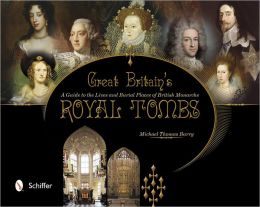
  • Great Britain's Royal Tombs

    A Guide to the Lives and Burial Places of British Monarchs

      Buy from Amazon
      Buy from Barnes and Noble
      Buy from Schiffer

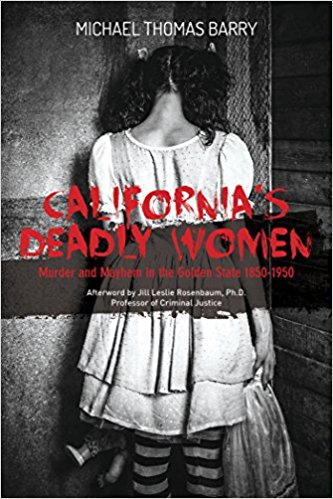
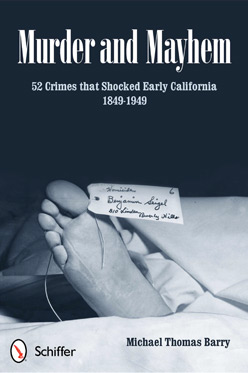
  • Murder and Mayhem

    52 Crimes that Shocked Early Califonia

      Buy from Amazon
      Buy from Barnes and Noble

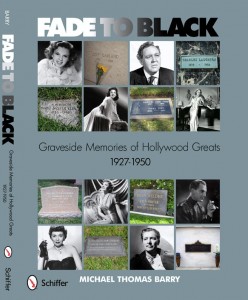
  • Fade to Black


      Buy from Amazon
      Buy from Barnes and Noble
      Buy from Schiffer Books

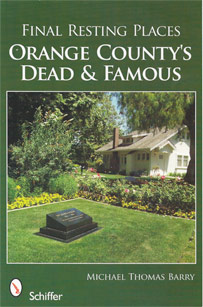
  • Final Resting Places


      Buy from Amazon
      Buy from Barnes and Noble
      Buy from Schiffer Books

  • Reviews and Testimonials

    "This is an enjoyable read offering more then the interesting anecdotes and history so well described by Michael Barry, but an opportunity for loyal fans to pay their respects to those they love and admire. Thank you Michael for your gift and I hope others enjoy it as much as I have."

    -Celeste Holm, winner of the Best Supporting Actress Oscar in 1948

    Read More

  • Newsletter Sign-Up

    Sign up for our newsletter to receive updates and information about upcoming events.

MichaelThomasBarry ©2009. All rights reserved.                                                                                      Created by SmartAuthorSites.com ... Websites for Authors